
Young Indiana Jones Chronicles Gameplay
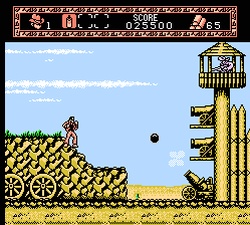
The Young Indiana Jones Chronicles is one of those games where your fingers remember the beat on their own. In Young Indiana Jones Chronicles on the trusty NES, everything revolves around motion: step, pause, jump, strike — back in the groove. Stages play out like tight, punchy episodes in a serial: one minute it’s cramped alleyways, then crumbling ruins, then rough ground with dust on the wind and enemies sliding out of the shadows. There’s no visible timer, but the pressure’s there: stand still for a heartbeat and you’ll eat a bullet or a rock; rush it and you’ll skid off a ledge. That push-and-pull between caution and bravery is the core thrill of Young Indy.
Rhythm and jumps
Indy’s jump is crisp with a readable arc, and half your success rides on it. Skinny platforms, short planks, ladders, ledges — the game wants precision without being petty: feel the stride, feel the height, catch the cue, and it clicks. There are those stretches you’re meant to nail clean: two short hops, duck a flying object, one step forward, another jump — and you’re into the next string of obstacles. That’s the platformer flow you want to grind for, like the best old-school NES arcade romps.
Episodes don’t spam traps, but they keep your head cool: something rains from above, the footing drops away, or an enemy waits to tag your landing. Mistakes are loud and clear — off by half a pixel, nicked by a bayonet, missed a duck — and you get bumped back. But every segment where you lock into the beat delivers that sweet timing high that keeps folks booting The Young Indiana Jones Chronicles again and again.
Fights and weapons
Combat isn’t just filler between jumps. The whip is the star — perfect for zoning, clearing threats before they close in. Fists are reliable in tight corridors, and a found pistol saves the day when shooters peek in from afar. Enemies don’t just charge straight — each has a tempo and preferred range: some wait, some hop, some lob grenades in an arc. Classic retro habits pay off: crouch and a bullet whistles overhead; step in — crack the whip; half-step back — then forward again before the window slams shut.
Despite the simple inputs, fights feel like mini-duels. You learn to read your foe: the extra step he shouldn’t take, the opening after a toss, the tiny pause before a shot. Those patterns are the heart of it; after a couple tries you’ve got the rhythm, and your hits become deliberate, not lucky. When it’s “how do I beat this boss,” the answer is usually in that measured half-step and a clean strike the moment the guard drops.
Episodes that breathe adventure
Levels flip like pages in a travel diary — each with its own rules. Sometimes it’s all careful hops over slim footholds, elsewhere it leans on gunplay, and sometimes you’re sprinting between cover, dodging fire. Young Indy keeps ending up where the pretty backdrop doubles as a hint: see a ladder, expect close-quarters scraps; windows ahead, think marksmen; a yawning drop below means your timing off the edge is about to be tested.
The pace in Young Indy feels like an invisible director nudging you on: keep moving, adventure’s ahead. But it never bans caution: bait an enemy, count your steps, play defensively if you want. Or push harder and it answers with brisk, almost arcade momentum, where each screen hands you a small, satisfying win. That’s why folks loved the “game about young Indy” — it pays out for boldness and still respects careful play.
Small discoveries and big trials
You’ll find crates and tucked-away niches along the way — little lifelines for one more try: a sliver of health, a rare bit of ammo, sometimes just the confidence to take a risky section a touch safer. Secrets don’t scream for attention; they’re woven into the scenery, and you start spotting them when you stop rushing and read the backdrop. For anyone chasing a hardcore Young Indiana Jones Chronicles run, it’s its own joy: the route gets tighter, the reserves deeper.
Bosses are each episode’s crescendo. Not walking health bars, but characters with habits: one bullies you with spacing, another baits with a jump, a third distracts with adds. Every time the game whispers: don’t brute-force it — outsmart it. A few mistakes in and you’ll know where to stand, when to duck, when to snap the whip, and when to unholster the pistol. Victory pops with a sharp musical sting, and it’s on to the next scene.
Fair challenge and a sense of journey
The difficulty is fair — deliciously retro. Indy’s fragile, and wins come from learned rhythm, not grind. A NES platformer in the best sense: the cleaner your timing, the easier the path gets. Eventually you stop thinking about buttons — your hands just do the work. That’s the good nostalgia: remembering those hours chasing a flawless run, and then it finally happens — no stumbles, no panic, a crisp whip crack and a neat landing right where you planned.
That’s how The Young Indiana Jones Chronicles really opens up: an adventure-action with clear rules, where every next stretch is a reward for staying calm and attentive. No fluff, no hurry. Just you, the screen, and that rhythm you want to catch again. And yes, if you enjoy sharing routes or watching others, a “NES playthrough” is a whole separate topic on /gameplay/ or a cozy chat about how someone found their line through that “impossible” bit.